


With your Saturday pass (or Festival pass) to the Buffalo Humanities Festival, you can attend series of great talks. It also includes screenings of six award-winning short films, curated by Sarah JM Kolberg, film scholar and PhD candidate in Visual Studies. These films, which build off our themes of renaissance, revitalization, and represent local Buffalo organizations, artists, and concerns, will run on a loop throughout the festival beginning at 11:00AM in Rockwell 301. Stop by over the course of the day and see the great work that current young, indie directors and filmmakers are making! Thanks to UB’s Department of Media Study for technical support.
Change in Buffalo Dir. Tiny Circus & Squeaky Wheel’s Buffalo Youth Media Institute students (2014) 1:57
In August of 2014, Tiny Circus members Carlos Ferguson and Katie In visited Buffalo, New York and worked with Squeaky Wheel’s Buffalo Youth Media Institute to produce Change in Buffalo. Each Tiny Circus film begins with a collaborative process. We think up and do our project together, listening to each other and working towards shared ownership and responsibility. We started this project by talking about what we would like to change and what we would like to see stay the same in Buffalo. Produced in partnership with the Buffalo Center for Arts & Technology.
Peter Pan Bakery Dir. Keif Roberts & Peter J. Haas (2014) 8:16
Peter Pan Bakery examines locals who work and dine at the family-owned Peter Pan Donut & Pastry Shop, a long-standing establishment weathering waves of change that are engulfing the Brooklyn neighborhood of Greenpoint. The Polish-dominated neighborhood around Peter Pan is one of the latest hot points of gentrification. Many life-long residents are finding themselves forced to leave their neighborhood as rents skyrocket. The film explores the personalities inhabiting the counter space where old and new clientele mingle, painting an intimate portrait of the bakery as an unwavering neighborhood institution.
The Moon Dir. David Nanto (2016) 2:56
The Moon is a modern love story set in New York City and was written using only lines and phrases from Shakespeare’s canon. By placing Shakespeare’s language in a modern context, the film shows how his observations of the human condition remain relevant, despite us being separated from the texts by oceans or centuries. The Moon was directed by playwright and filmmaker David Nanto and was adapted from his award-winning play, Much Ado About Love. It is one in a series of short films celebrating the 400th Anniversary of Shakespeare’s death. To learn more about these films, visit www.threeminutelovestory.com
Everybody Lives Downstream (Channels cut) Dir. Anna Scime (2011) 28:22
Everybody Lives Downstream surveys the natural and constructed landscapes and life within the floodplain and last six miles of the Buffalo River – where the river has been deepened and straightened to enable industry. An eco-historical moving image document, Everybody Lives Downstream asks its audience to contemplate some fundamental questions. What environmental and social issues arise as communities remediate, restore, and re-develop the land? At what benefit and cost do these changes come and how long will the effects endure? What motives are fueling the rekindled interest in water as a universal resource, a cultural referent, a recreational space, and economic stimulant?
Q Dir. Felipe Vara de Rey (2012) 7:53
A Knight-errant in Brooklyn, Q has a goal: conquering the heart of the beautiful Dolores. However, his loyal friend Santos doesn’t think it will be that easy. They are going to need a strategy to get to Dolores. After all, who knows what fierce adversaries they might encounter on their way?
Twelfth Night Dir. Kane Chattey (2016) 7:38
In SBTV’s Twelfth Night, shot in The Globe’s Sam Wanamaker theatre with an original score by producer Harry Love, five UK artists; Maverick Sabre, Nego True, NoLay, Eyez and Mic Righteous, create new lyrics from Shakespeare’s play, re-envisioning it for a modern audience.
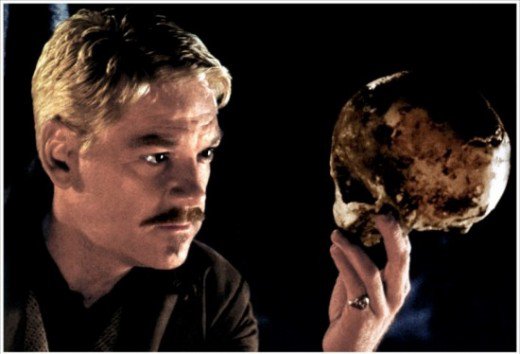 Climate change and its effects are pressing issues in our world today, but what about during the Renaissance? What does climate change have to do with Shakespeare’s Hamlet? While we might all be familiar with the Danish prince’s melancholy and philosophical quandaries, Philip Collington and Emma Collington say we should also examine how the play’s setting of Denmark’s icy coast contributes to Hamlet’s mental deterioration. In their Buffalo Humanities Festival talk, Philip Collington and Emma Collington use Hamlet to address the impact of the “little ice age” on individuals in the Renaissance.
 Buffalo Humanities Festival

You must be logged in to post a comment.