
Philip Collington and Emma Collington, “Hamlet and the Winter Blues”

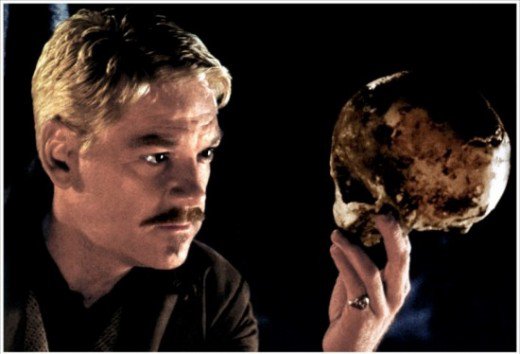
12110229_f520 Climate change and its effects are pressing issues in our world today, but what about during the Renaissance? What does climate change have to do with Shakespeare’s Hamlet? While we might all be familiar with the Danish prince’s melancholy and philosophical quandaries, Philip Collington and Emma Collington say we should also examine how the play’s setting of Denmark’s icy coast contributes to Hamlet’s mental deterioration. In their Buffalo Humanities Festival talk, Philip Collington and Emma Collington use Hamlet to address the impact of the “little ice age” on individuals in the Renaissance.

Roughly between the early 14th century through the mid-19th century, our planet experienced what geologists call the Little Ice Age (LIA), in which mean annual temperatures across the Northern Hemisphere fell due to the expansion of mountain glaciers across earth. While the time period of the Little Ice Age is contested, it did occur after what is known as the Medieval Warming Period and before our current period of warming that began in the late 19th and early 20th centuries.

The LIA had significant effects on civilizations across the globe. In Europe, glaciers from the Alps expanded and “advanced far below their previous (and present) limits, obliterating farms, churches, and villages in Switzerland, France, and elsewhere.” All over the world, cold winters and wet summers ruined crops and harvests.

So how does Hamlet’s sensitivity to light, darkness, and cold reflect both Renaissance and modern theories about climate and mental health? To find out, you’ll have to join us on September 24 from 11:00am-12:00pm in Ketchum Hall, Room 113.

Philip Collington (PhD, University of Toronto) teaches Shakespeare and British literature at Niagara University. He recently published an article on Hamlet in Texas Studies in Literature and Language. Emma Collington studies psychology and biomedical sciences at the University of Waterloo, investigating the relationship between embryology and metastasis. She also volunteers as a peer mental health counselor.
Richard A. Bailey on “Wendell Berry, Renaissance Man”

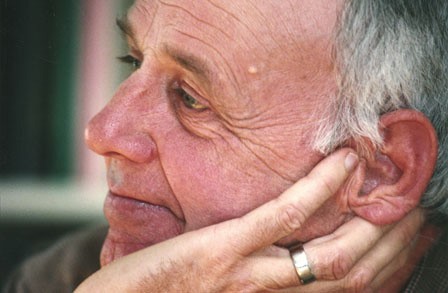
wendell-berry Richard A. Bailey’s talk at Buffalo Humanities Festival will focus on contemporary American author Wendell Berry, a true renaissance man as seen in the wide range of topics covered in his writing. For Bailey, Berry serves as a modern-day prophet, whose calls for repentance are lamentations we should consider seriously, especially in communities, such as Buffalo, intent on “reviving.”
Wendell Berry, a Kentucky writer, has published more than sixty books (in poetry, fiction, and non-fiction) over the last sixty years. The agricultural and local community themes found in his writing carry through into in his life; Berry lives on a farm in Kentucky near where he grew up. Also an activist, Berry has protested, written, and spoken out against nuclear power, war, and environmental degradation. He is a strong supporter of local economies and local sustainability; his 1977 book The Unsettling of America: Culture and Agriculture made a case for eating local decades before the farm-to-table movement became a restaurant trend.

How might Wendell Berry’s vision of environmental sustainability and support of local economies be applied to Buffalo’s current renaissance and revitalization movements? In June 2015, The Buffalo News reported that Buffalo Niagara remains one of the most segregated metro areas in the country. In 2015, a study identified Buffalo as having one of the highest minority poverty rates in the country. Can sustainable agriculture and access to locally grown food help alleviate a racial and class division in our area? Or are there ways that the “Support Local” conversation can still exclude members of our community? What can Berry offer us in his decades of activism, experience, and writing as we think about who and what revitalization appeals to, and how to define revitalization in our local Buffalo communities?

You can read Berry’s essay, “The Idea of a Local Economy,” in Orion Magazine and an interview with Berry in The Guardian. And we hope you join us for Professor Bailey’s talk, “Wendell Berry, Renaissance Man” on Saturday, September 24 from 11:00am-12:00pm, Rockwell, 204.

Richard A. Bailey is Associate Professor of History at Canisius College, where he teaches courses on early American history, race and religion in America, and fly fishing. The author of Race and Redemption in Puritan New England (2011), he is currently working on a book-length study of Wendell Berry.

Jane Fisher on “Black Soldiers and the Harlem Renaissance”


0701001r


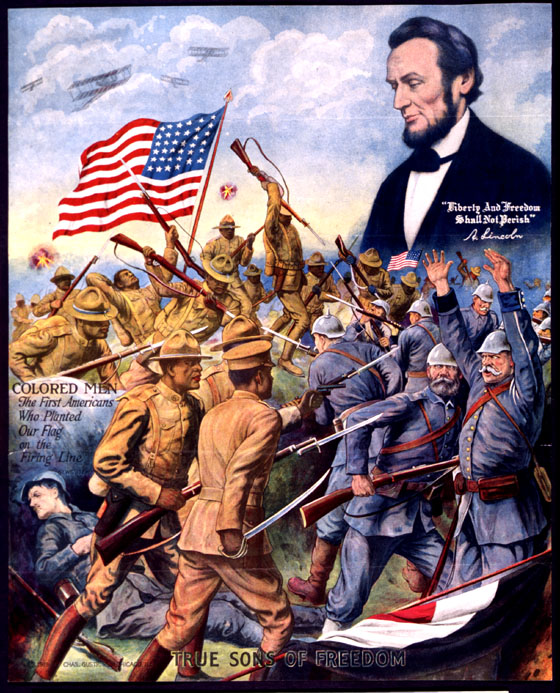
Jane Fisher, Associate Professor of English at Canisius, asks: “How did World War I African American soldiers emerge from a racist society to become transformative figures in Harlem Renaissance literature?” By looking at Claude McKay’s writing, Professor Fisher will examine how WWI African American soldiers overcame stereotyping and discrimination to offer a new model of African American manhood based on merit and equality, two characteristics that were central to the U.S. claim that their involvement in WWI would “Make The World Safe For Democracy.”

World War I also overlapped with the Great Migration, 1914-1920, which saw around half-a-million black southerners move from the rural south to northern cities such as Detroit, New York, Cleveland, and Chicago. Motivated by a lack of economic possibility rooted in racist social and political policies, black southerners hoped to capitalize on industrial labor opportunities in the North, which were increasing due to wartime production.

Despite the continued hold of segregationist and racist policies throughout the U.S. in the early 1900s (for example, the wide reach of Jim Crow laws in the south and Woodrow Wilson’s segregation of federal offices), about 200,000 African American soldiers fought in World War I with the U.S. American Expeditionary Force and the French Army.

The United States entered World War I late, in 1917, after several years of proclaiming isolationism. Black soldiers’ experiences of segregation and racism at home and in the U.S. military deeply contrasted with the U.S. domestic war propaganda, which claimed the U.S. was entering the war protect democracy.

The majority of these soldiers served as service, but roughly 40,000 saw combat on the front lines serving in segregated units. The 93rd Division, which included the famous “Harlem Hellfighters” (the 369th Infantry Regiment), fought with the French Army, which black soldiers found more welcoming than their own white countrymen. The Harlem Hellfighters “spent more than six months on the front lines—longer than any other American unit—and never surrendered an inch of Allied territory nor lost a single soldier through capture.” [Click to view a photo essay of African Americans soldiers in WWI, from the Oxford African American Studies Center.]

Both military and civilian France’s acceptance of American black soldiers offered an alternative to the entrenched racism and violence that African Americans experienced back home. This acceptance would cast France in a positive light for many African Americans. Some African American GIs would elect to stay in France after the war. In the years after the war, many black intellectuals, artists, and musicians from the U.S. and Caribbean (such as the French colonies) would head to Paris, which became a thriving center for an emerging black internationalism. Major figures of the Harlem Renaissance spent time or visited Paris, cultivating an intellectual and artistic exchange between Harlem, Paris, and the Caribbean that played no small role in placing Harlem as a cultural center on not just a national, but an international scale.

We hope you’ll join us at Professor Fisher’s talk, “Black Soldiers and the Harlem Renaissance,” from 1:00pm-2:00pm in Rockwell, 302.

Jane Fisher is Associate Professor in the English Department of Canisius College where she teaches twentieth-century literature and medical humanities. Questions engaging gender, war, and race motivate her teaching and research.  Her book, Envisioning Disease, Gender and War: Women’s Narratives of The 1918-19 Influenza Pandemic, was published by Palgrave/Macmillan in 2012.

Additional Sources: http://exhibitions.nypl.org/africanaage/essay-world-war-i.html